
Local Government bonds issuance methods
Underwriting mechanisms for bank-underwritten bonds vary by issuer. However, generally, small issue amounts are underwritten by financial institutions designated by each local government, while large issue amounts are underwritten by underwriting syndicates composed solely of financial institutions.
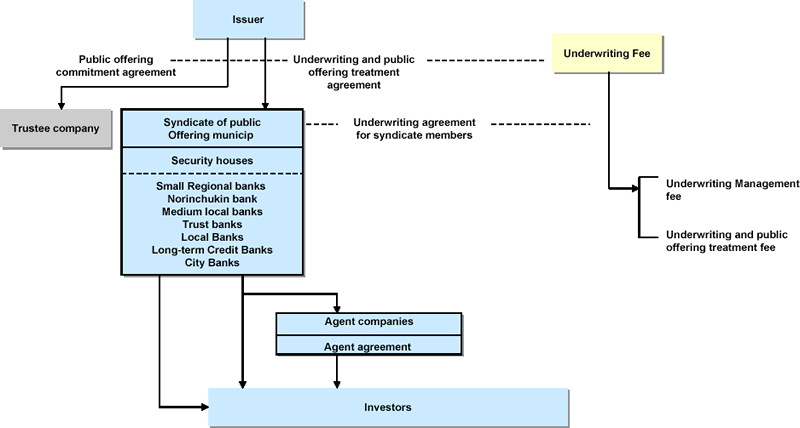
For publicly offered local government bonds, an underwriting syndicate is formed for each issuer, consisting of securities companies and financial institutions, and enters into an underwriting and offering agreement with the issuer. The issuer also enters into an offering commission agreement with the trustee company.
Previously, publicly offered local government bonds were only handled by securities companies among the syndicate members, but with the start of over-the-counter sales in April 1983, banks and other financial institutions have also begun to handle the offering. Any remaining balance after the offering is handled is underwritten by securities companies and financial institutions. Securities companies that are not members of the underwriting syndicate also receive a portion of the bonds from member securities companies and sell them.
The issuance schedule is determined after the issuance terms of the government bonds are finalized, and negotiations regarding the issuance terms are held between the authorities (Ministry of Internal Affairs and Communications) and the syndicate. The issuance conditions are posted the day after the results of the government bond auction are announced. If the issuing organization, issue amount, and issuance conditions for each month are approved at the syndicate liaison meeting held on the day the conditions are presented, the offering usually begins on the same day, with the application deadline around the 20th and the payment deadline around the 25th.
-
ENLARGE
Click on the image to open an enlarged version